UK Travel
8 min readThe road north: London to Manchester
About two hundred miles of motorway separates London from Manchester. Whether to drive it depends far less on the distance than on what happens at either end of the journey.
- Distance
- Approximately 200 miles by road
- Corridor
- M1, M6 and M56, with the M62 as an alternative
- Duration
- Roughly 4 hr to 4 hr 30 min in settled conditions
- Structures
- One way, return with waiting, or retained for the day
In Short
The London to Manchester run is among the most frequently made long-distance journeys in England, and it is the one clients most often raise when weighing a chauffeur against a train. Both are good answers. Which is the better one turns on the number of passengers, the amount of luggage, and where in each city the day actually begins and ends.
The road route is roughly two hundred miles and runs almost entirely on motorway. It is a straightforward drive in the sense that there are very few decisions to make, and an unpredictable one in the sense that the M6 carries an enormous volume of freight and a single incident can rewrite the timing.
This guide covers the corridor itself, honest journey times, the point at which rail becomes the better instrument, and the practical questions of driver hours and whether to hold the vehicle at the far end or send it home. The answers shift with the number of passengers and the shape of the day, so the useful figures are ranges rather than single numbers.
01Section
The corridor: M1, M6 and M56
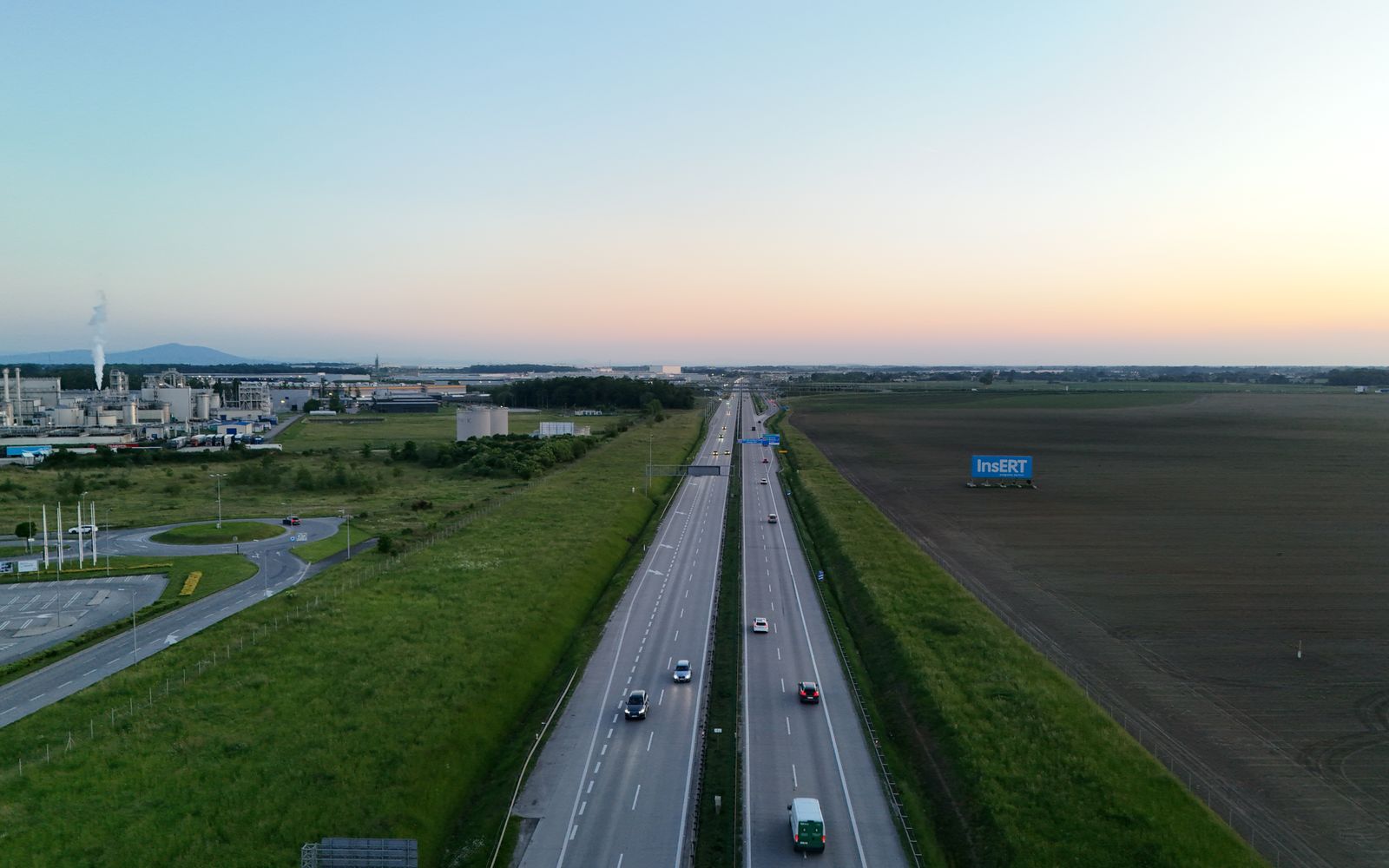
The standard route leaves London on the M1, joined either at Brent Cross or, more usually from central London, by way of the A1 and the M25 to junction 6A. The M1 then runs north past Luton, Milton Keynes, Northampton and Leicester to the Catthorpe interchange, where the M6 begins.
The M6 carries the journey past Coventry and Birmingham. Northbound traffic can either take the M6 Toll around the east of the conurbation or stay on the M6 through the elevated section. The toll route is often calmer in the middle of the day and almost always the better choice at peak. North of Birmingham the M6 runs through Staffordshire and Cheshire to junction 19.
From junction 19 the M56 runs east towards Manchester, serving Manchester Airport at junction 6 and continuing to the city on the A5103 Princess Parkway. For destinations north or east of the centre the alternative is to stay on the M6 to junction 21A and take the M62, approaching Manchester from the west instead.
- M1 north from London to the Catthorpe interchange
- M6 past Coventry and Birmingham, with the M6 Toll as an alternative
- M56 east from junction 19 for the airport and the city centre
- M62 from M6 junction 21A for destinations north and east

02Section
Realistic journey times
Four to four and a half hours is a reasonable expectation door to door in settled conditions, before any comfort stop. Leaving central London between ten in the morning and two in the afternoon gives the best chance of landing at the lower end of that range. Very little else about the timing is within anybody's gift.
A departure into the morning peak can add forty-five minutes before the journey has properly begun, since the M1 and the M25 both congest to the north-west of London. Late afternoon northbound is similarly slow around Birmingham. A very early start is quick but places the arrival before most destinations have opened their doors.
The M6 is the variable. It is the main freight artery between the Midlands and the North West, and an incident between junctions 10 and 19 leaves few useful alternatives. Where a hard arrival time matters, the honest planning approach is to add an hour to the expected duration rather than to drive faster.
- Settled conditions with an off-peak departure: about four to four and a half hours
- Morning or late-afternoon departure: add up to an hour
- A fixed arrival commitment: build in a full hour of margin

03Section
When road beats rail, and when it does not
A direct train between Euston and Manchester Piccadilly is quicker than the road on the timed leg, and for a single traveller going from central London to central Manchester it is usually the better choice. The comparison changes the moment either end of the journey is not a station, which is more often than a timetable suggests.
Road wins where three or four passengers travel together, where luggage is substantial, where the origin or destination sits away from a station, or where the itinerary carries several stops. It also wins where a party wants to talk privately for the whole journey, which is not something a train carriage reliably offers.
The realistic comparison is door to door, including the taxi at each end, the platform time and the walk. A chauffeur journey has none of those transitions. For a group leaving a Surrey office at seven for a half past nine meeting in Cheshire, rail is not competitive at all.
- Rail: a single traveller, centre to centre, travelling light
- Road: groups, heavy luggage, multiple stops, non-central endpoints
- Compare door to door rather than station to station
04Section
Driver hours and breaks
A four-hour drive sits well within a chauffeur's working day, but a same-day return is a different proposition entirely. Eight hours behind the wheel plus a wait in the middle makes for a very long shift, and fatigue management is a legitimate part of the planning rather than an inconvenience raised late.
For a return on the same day, a comfort break on the way north and a proper rest during the waiting period are the minimum. Where the wait is short and the return would finish very late, a second chauffeur or an overnight stay is the safer arrangement. A serious operator raises this rather than waiting to be asked.
Passengers benefit from a stop as well. A single ten-minute pause at a service area on the M1 or M6 costs almost nothing against the total and makes the second half of the journey considerably more comfortable. Say at the outset if you would rather run straight through. Either instruction is easy to follow; the difficulty is guessing which one you want.

05Section
Working en route
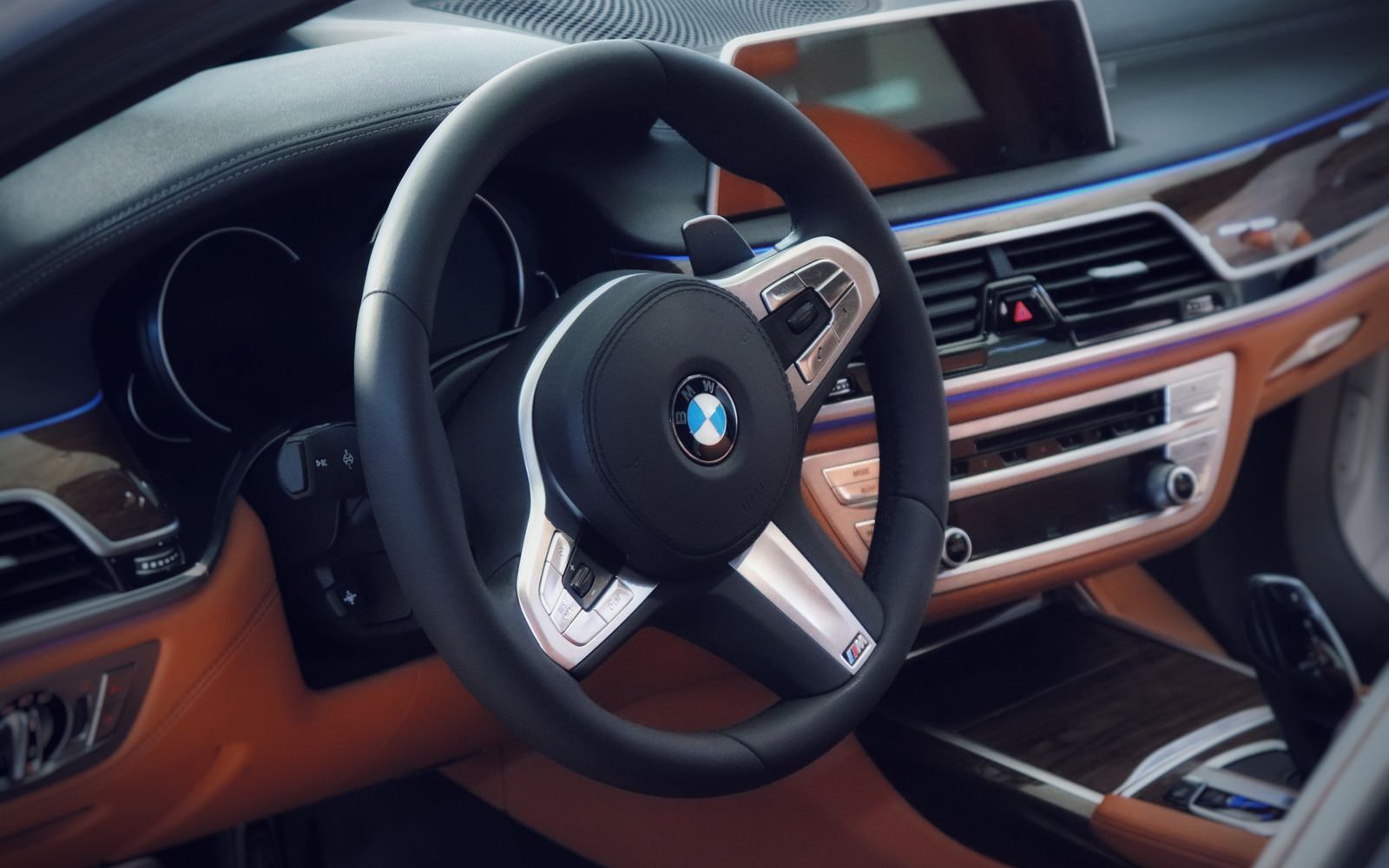
The corridor suits working. The long motorway sections are smooth and the road noise in a well-specified saloon stays low enough for calls. Mobile coverage is broadly reliable along the M1 and the M6, thinning in places through the Staffordshire and Cheshire stretches. Download anything essential before departure rather than relying on a signal at seventy miles an hour.
A four-hour block is enough to clear a genuine amount of work, particularly reading and calls. Rear power outlets keep devices alive for the full journey. If a video call is scheduled, place it on a motorway section rather than on the approach into either city, where the driving is busier and the background noise higher.
Discretion matters on this route because so much of the traffic between the two cities is business travel. Conversations in the cabin, whether between passengers or on a call, stay in the cabin. Passengers travel this corridor with colleagues and competitors alike, and the chauffeur is simply not part of that conversation in either direction.

06Section
One way, or return and wait
There are three structures for this journey and choosing correctly saves both money and awkwardness. A one-way transfer suits an overnight trip or a return by air or rail. A return with the vehicle waiting suits a day trip built around a defined meeting. A chauffeur retained for the day suits an itinerary with several Manchester stops.
The waiting option is often the most efficient in practice. The chauffeur remains in the area, the vehicle stays available for an unplanned second stop, and the return leaves when you do rather than at a time booked in advance. It requires an honest estimate of how long you will be, so that the chauffeur can plan a proper rest.
For trips of two or more days, positioning a vehicle and chauffeur locally is worth considering, since it removes two empty legs from the arrangement. Whether that is the right answer depends on how much driving the visit itself actually involves. Describe the itinerary rather than requesting a structure, and the better option usually becomes obvious to both sides.
- One way: overnight stays and mixed-mode itineraries
- Return with waiting: a single defined meeting or event
- Retained for the day: several stops around the city
07Section
Arriving in Manchester
Most business destinations sit within a tight area around the city centre. Spinningfields, St Peter's Square, King Street and Deansgate hold the majority of the professional and financial offices. The centre has extensive bus and tram priority, and the Metrolink lines running through the middle restrict where a vehicle can legally stop.
Manchester Airport is reached directly from the M56 at junction 6 and sits around fifteen to twenty-five minutes from the city centre outside peak hours. MediaCityUK in Salford Quays lies west of the centre and is usually approached from the M602. Old Trafford, the Etihad and the Cheshire commuter belt each have their own approaches again.
Give your chauffeur the building name and the entrance rather than only a postcode. Central Manchester holds a number of large mixed-use developments where one postcode covers several buildings and the correct set-down point is not obvious from the road. A minute spent on that detail at the booking stage saves a circuit of a one-way system on arrival.
Reader Questions
Answered plainly.
If something here is not covered, send the question over. A direct answer is faster than a form.
Four to four and a half hours is realistic in settled conditions with an off-peak departure, before any comfort stop. A departure into the morning peak, or a northbound run through Birmingham in the late afternoon, can add up to an hour. Where the arrival time is fixed, plan on the longer figure.
The M1 north to the Catthorpe interchange, then the M6 past Coventry and Birmingham, then the M56 east from junction 19. The M6 Toll around Birmingham is often used to avoid the busiest section. For destinations north or east of the city the M62 is taken instead.
It depends on the ends of the journey. For one person travelling centre to centre with a small bag, the train is quicker. For a group with luggage, several stops, or an origin or destination away from a station, the road is faster door to door and considerably simpler to manage.
A short comfort break on the M1 or M6 is normal and costs very little against the total journey. Tell the chauffeur at the start if you would rather run straight through. On a same-day return, a proper rest during the waiting period is part of managing the driving safely.
Usually yes, provided there is a genuine rest period in Manchester. Where the wait is short and the return would finish very late, a second chauffeur or an overnight arrangement is the sensible alternative. That is agreed at the planning stage rather than discovered on the day.
For a single meeting or event, waiting is normally the better structure: the vehicle stays available and the return leaves when you are ready. For an overnight stay, a one-way transfer in each direction is usually cleaner. For a visit of several days, positioning a vehicle locally is worth discussing.