Airports
8 min readHeathrow, terminal by terminal
Heathrow operates four passenger terminals across a site the size of a small town. Knowing which one you need, and how arrivals meetings actually work there, removes most of the friction.
- Terminals
- Two, Three, Four and Five in passenger operation
- Arrivals
- Chauffeur meets inside the hall with a name board
- Central London
- Roughly 40 to 90 minutes depending on the hour
- Required
- Flight number, terminal and an honest luggage count
In Short
Heathrow is the largest of the London airports and the principal point of entry into the United Kingdom. That scale is why a transfer there takes more planning than a city-centre pickup. Terminals sit on opposite sides of the runways, arrivals halls each have their own meeting conventions, and forecourt access is both controlled and charged.
None of it is difficult once you know the shape of the place. What follows explains the terminal layout, what happens in the interval between an aircraft touching down and a passenger appearing in the arrivals hall, and how to plan luggage and timing so that the vehicle you booked is the one you actually needed.
The recurring theme is information. A chauffeur who holds your flight number, your terminal and an honest estimate of your luggage can plan around almost anything the day produces. Without those three items, even a short transfer becomes guesswork dressed up as a booking. Supplying all three takes about a minute.
01Section
Terminals 2, 3, 4 and 5
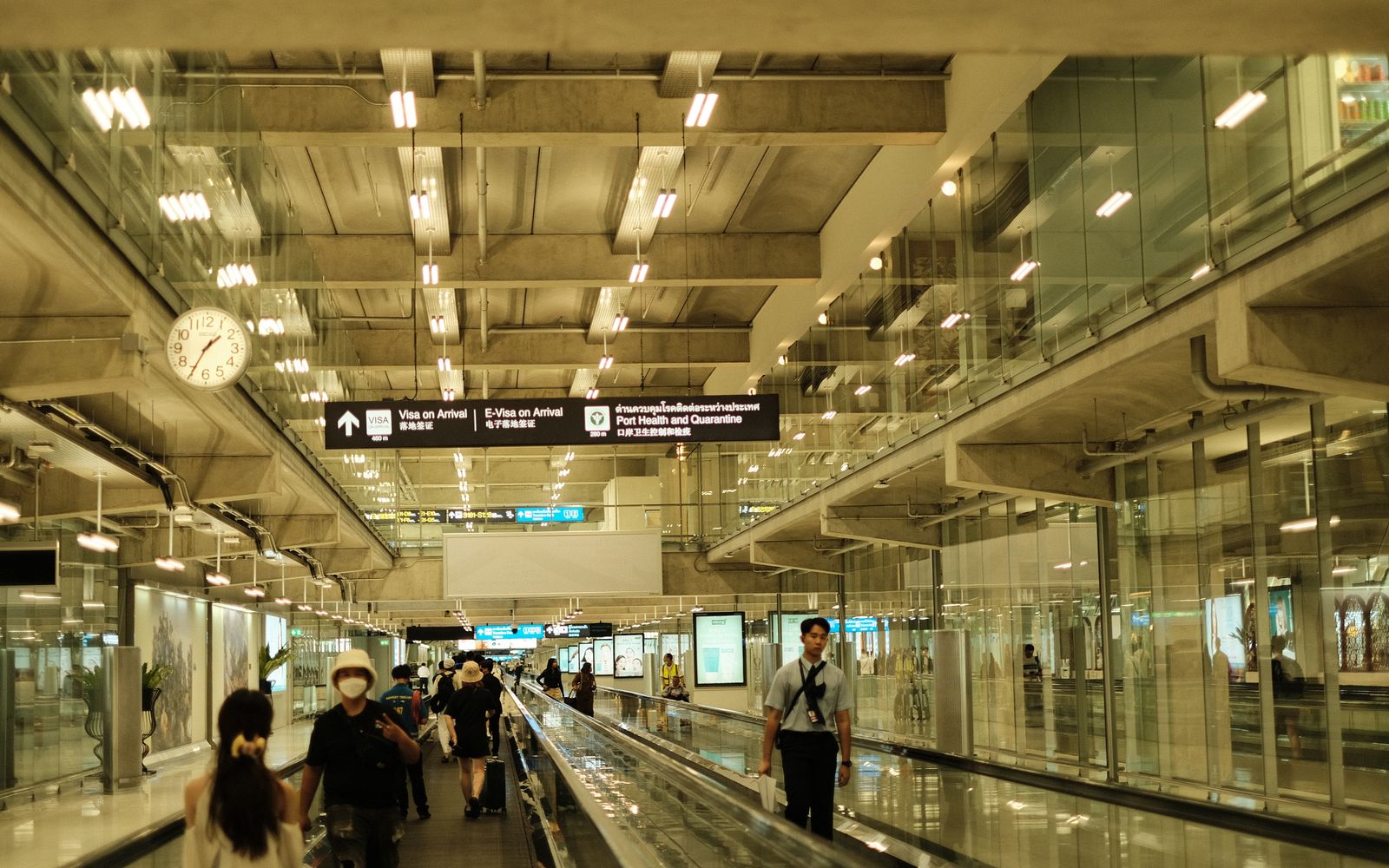
Heathrow has four operating passenger terminals. Terminal 2, the Queen's Terminal, and Terminal 3 sit together in the central area between the two runways. Terminal 4 lies to the south of the southern runway with its own approach. Terminal 5 occupies the western end of the site and is reached from the M25 at junction 14 along a dedicated spur road.
The split matters because moving between terminals is not trivial. The two central-area terminals are close together on foot and by rail. Terminal 4 and Terminal 5 are separate journeys altogether. Arriving at the wrong terminal to meet a passenger costs twenty minutes at best, and considerably more when the central area is busy.
Airlines move between terminals, and alliance groupings rather than any fixed rule determine where each one operates. The terminal printed on your booking confirmation is the one to give your chauffeur, and it is worth re-checking it the day before travel, particularly on connecting itineraries where the inbound and outbound terminals differ.
- Terminal 2: central area, on the northern side
- Terminal 3: central area, immediately alongside Terminal 2
- Terminal 4: south of the southern runway, separate access
- Terminal 5: the western end of the site, its own approach from the M25
02Section
Where you meet your chauffeur on arrival
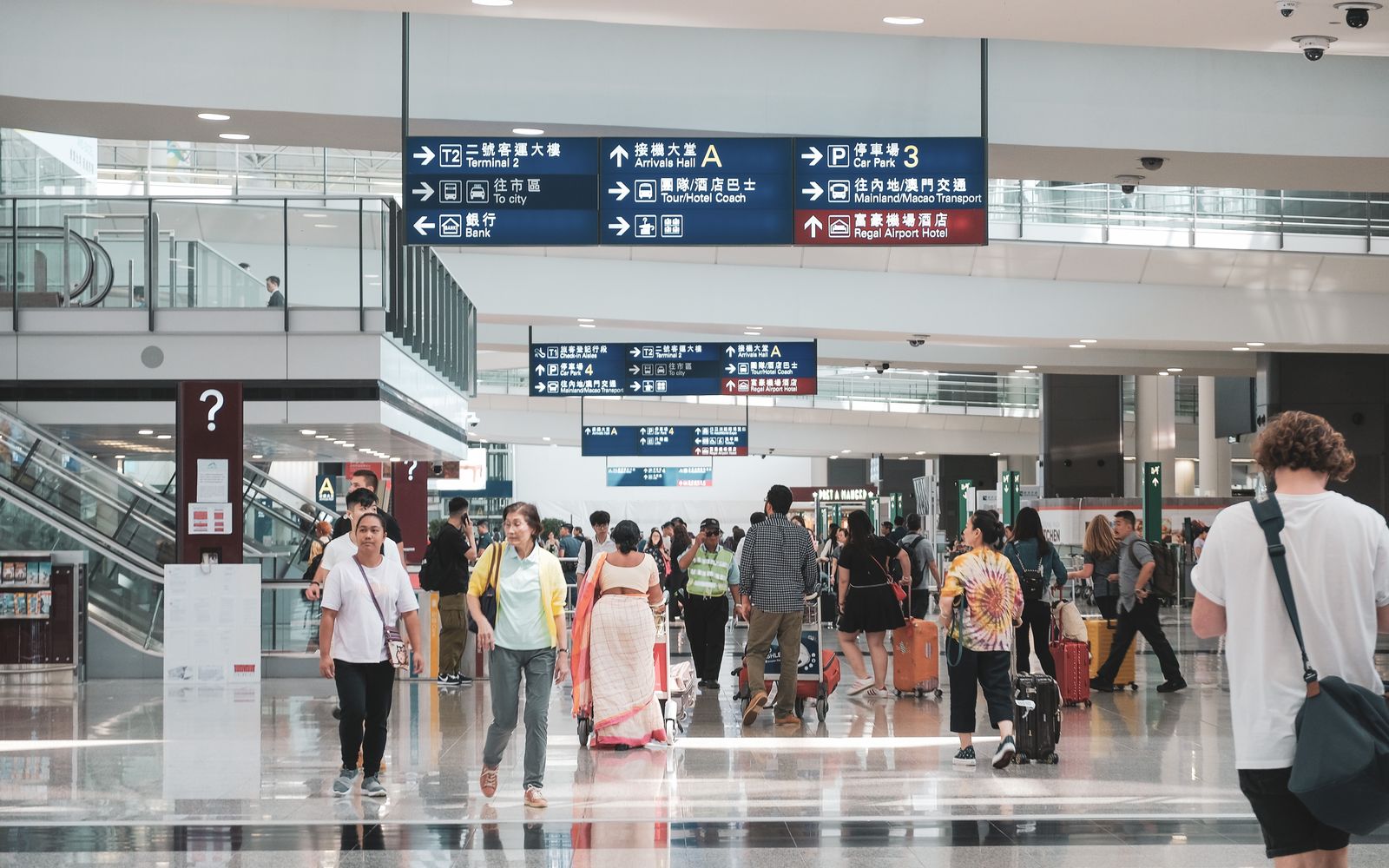
Each terminal has a designated arrivals meeting area where chauffeurs wait holding a name board. It sits inside the building, past the customs exit, and it is the default arrangement for a meet-and-greet booking. The chauffeur parks in the short-stay car park, walks through, and meets the passenger at the barrier.
The alternative is a kerbside collection, where the vehicle comes onto the forecourt once the passenger is outside and ready. It is quicker for a traveller carrying hand luggage only who knows exactly where they are standing. It is far less forgiving for anyone unfamiliar with the terminal or arriving at the end of a long flight.
For groups arriving on different flights, meeting inside the terminal is almost always the better structure. One name board, one meeting point, one departure. Assembling a party of five on a Heathrow forecourt is a poor use of everybody's morning and an even poorer use of the free waiting allowance.
- Meet and greet: the chauffeur waits inside arrivals with a name board
- Kerbside: the vehicle comes to the forecourt once you are outside
- Groups on separate flights: assemble inside, then leave together
03Section
Why the flight number is recorded
A flight number is the only reliable handle on an arrival. Scheduled times move, aircraft are held, and stands change at short notice. Recording the flight number allows arrival times to be monitored so that the chauffeur is dispatched to match the aircraft rather than the timetable printed on a ticket.
In practice this means a delayed flight does not cost you a wasted booking, and an early arrival does not leave you standing in a concourse. It also means the free waiting allowance can sensibly be measured from landing rather than from the time originally quoted, which is the fairer basis on a long-haul sector.
Supply the flight number, the origin airport and the terminal when you book. If your itinerary changes, send the new flight number as soon as the airline issues it. It is a short message that prevents a long problem, and it takes less time than reading this paragraph. The same applies to a change of arrival terminal.

04Section
Immigration, baggage and realistic clearance times
Landing is not arriving. Between wheels down and the arrivals hall lie taxiing to stand, disembarkation, the walk to the border, the queue itself, baggage reclaim and customs. On a good day with hand luggage that sequence can take twenty minutes. With hold baggage at a busy arrival bank it can take an hour or more.
Passengers eligible for the electronic gates generally clear the border faster than those who require a staffed desk. Baggage reclaim is the less predictable half of the process. Bags from a wide-body aircraft take time to reach the belt, and a passenger travelling with several cases will be among the later ones out of the hall.
The planning consequence is simple. Do not schedule a meeting ninety minutes after a long-haul landing time and assume it will hold. Build the clearance window into the day, tell the chauffeur what you realistically expect, and treat anything faster than that as a bonus rather than a plan. Two hours from landing to a central London desk is a sound working assumption.
- Hand luggage with e-gate eligibility: often twenty to thirty minutes
- Hold baggage at a peak arrival bank: allow an hour or more
- Connecting passengers and large parties: allow further margin again

05Section
Departures, the forecourt and the drop-off charge
Most large UK airports now charge vehicles for using the terminal forecourt to set passengers down, and Heathrow is among them. The amount varies by airport and is set by each airport operator, so it is worth establishing how your chauffeur company treats it. Some include the charge within the quotation and others pass it through.
The departure routine itself is straightforward. The vehicle draws onto the terminal forecourt, the chauffeur unloads and, where requested, walks the luggage as far as the check-in desk. Where a party wants a longer or calmer handover, parking in the short-stay car park is the better option and avoids a rushed goodbye at the kerb.
Departure timings should be worked backwards from the check-in deadline rather than from the flight time, then padded for the road. The A4 and the M4 spur both congest during the morning peak, and the M25 approach to junctions 14 and 15 is unreliable at exactly the same hours. Give the chauffeur the check-in cut-off and let the departure time follow from it.

06Section
Planning luggage capacity before you book
The most common cause of a difficult airport pickup is luggage that does not match the vehicle. A saloon boot swallows two large cases and a small one comfortably. Four passengers returning from a fortnight abroad will not fit into it, whatever the passenger count on the specification sheet appears to permit.
Count cases, not people. A large case is a hold-sized suitcase; a cabin case is what fits an overhead locker. Golf bags, ski equipment, instruments and pushchairs need declaring separately, because they change the geometry of the load rather than simply its volume. A child seat occupies a seat as well as space, so mention that too.
Where the numbers are marginal, an MPV solves it. So does a second vehicle, which is frequently the better answer for a party of six with full hold luggage. Make, model, colour and specification remain subject to availability and confirmation, so give the operator the real figures early and let it allocate accordingly.
- Count large cases and cabin cases as separate figures
- Declare golf bags, skis, instruments and pushchairs by name
- Solve a marginal load before travel, never at the kerb
07Section
Journey times into London and beyond
Heathrow sits west of London, close to both the M4 and the M25. Central London is reached along the M4 and the A4 through Chiswick and Hammersmith, or via the A312 and the A40 for destinations north of Hyde Park. Which of those a chauffeur uses depends entirely on the hour.
Allow forty to sixty minutes to Mayfair, Knightsbridge or Belgravia outside peak hours, and up to ninety when the A4 corridor is heavy. The City and Canary Wharf sit further east and typically add fifteen to thirty minutes on top of that. Westbound destinations such as Windsor, Ascot and Reading are usually quicker from Heathrow than anywhere central.
These are ranges rather than promises. Heathrow traffic follows the same morning and evening peaks as the rest of the region, with the airport's own arrival banks layered on top. A departure time chosen with the peak in mind is worth more than any amount of skilled driving afterwards. Where the schedule permits it, moving a pickup by thirty minutes often saves more than that.
Reader Questions
Answered plainly.
If something here is not covered, send the question over. A direct answer is faster than a form.
The one printed on your airline booking. Give the terminal when you reserve and confirm it the day before, since airlines occasionally move. Terminals 2 and 3 sit together in the central area, while Terminal 4 and Terminal 5 have entirely separate approaches and are treated as distinct destinations.
Twenty to thirty minutes is realistic with hand luggage and electronic gate eligibility. With hold baggage at a busy arrival bank, an hour or more is common. The chauffeur waits inside the arrivals hall throughout, so there is no reason to hurry the border or the belt.
Forecourt drop-off is chargeable at most large UK airports, with the amount set individually by each airport operator. Ask whether your quotation includes it or adds it afterwards. Where a longer handover is wanted, using the short-stay car park instead is the calmer alternative.
The flight number is recorded at the time of booking and arrival times are monitored, so the chauffeur is dispatched against the actual arrival rather than the published schedule. A delay usually requires no action from you at all. If the flight is cancelled and rebooked, send the replacement flight number as soon as you have it.
A large executive saloon typically takes two hold cases plus a cabin bag or two, and less than that when the boot is shared with a pushchair or sports equipment. Choose the vehicle on case count rather than passenger count. Where the load is marginal, an MPV or a second car is the reliable answer.
Yes, provided the change is communicated. A terminal change alters where the chauffeur parks and how far he walks, and at Heathrow that is a genuinely different journey rather than a short reposition across a car park. Send the update the moment your itinerary changes.