Skip to content

Airport Chauffeur

Chauffeur transfers at Heathrow Airport

Heathrow has four terminals and one way of working across them. We log your flight number when you book, and the car is placed at whichever terminal you really arrive into.

LHR

Heathrow

Greater London

Heathrow Airport — chauffeur transfers with Platinum Chauffeurs
Code
LHR
Terminals
2, 3, 4 and 5
Access
M4 J4, M25 J14 and J15, A4
Location
Hillingdon, west London

Heathrow Airport

No other airport in the country handles as much scheduled long-haul traffic as Heathrow, and the landside layout shows it. Inside the Central Terminal Area, Terminals 2 and 3 stand side by side. Terminal 4 is off to the south-east with an approach of its own. Out at the western end of the airfield you'll find Terminal 5, which you reach from Junction 14 of the M25. So any Heathrow chauffeur transfer begins by pinning down which of the four terminals is yours.

Every road into Heathrow has its own character. Most eastbound traffic uses the M4 spur, which leaves the motorway at Junction 4. Along the northern edge, the A4 Bath Road passes Longford and Harmondsworth, and it proves its worth whenever the spur clogs. From the west and the south, the M25 does the work. Heading into town, the bottlenecks are Chiswick and Hammersmith, and that's the reason each figure further down this page is given as a range and not a guarantee.

Before your travel day, we put everything in writing: the car, your chauffeur's name, where you'll meet and what time the pickup is. Nobody coming off an eleven-hour sector should have to work anything out on the spot. We settle the details while you're still flying.

How It Works Here

The pickup, described plainly.

Arrivals

  • When you book, we note down your flight number and the terminal it's due into.
  • On the day, we monitor the published arrival time and send the chauffeur out so the car is ready as you step off the aircraft.
  • Before you touch down, you'll receive a message with your chauffeur's name, the car and its registration.
  • Your chauffeur meets you in the arrivals hall holding a name board, or waits at the designated pickup area if that's the option you chose when booking.
  • The chauffeur loads your cases, and the car pulls away straight onto the airport's road network.
  • Should your flight divert or run very late, we don't cancel; we rework the booking to fit the new arrival time.

Departures

  • Your pickup time comes from working back from the check-in cut-off, with your terminal taken into account.
  • Your chauffeur turns up before the time we agreed and waits, so nobody rushes the loading.
  • On the day, we decide whether the M25, the A4 or the M4 spur makes more sense given the traffic.
  • We drop you on the departures level at the right terminal, and the chauffeur takes the bags out.
  • If you're flying before six, we get the car ready the previous night and look up any overnight roadworks.

Terminals

  • Terminal 2
  • Terminal 3
  • Terminal 4
  • Terminal 5

Indicative Journey Times

Central London
45–75 minutes
Mayfair
40–70 minutes
Windsor
20–35 minutes
Oxford
75–110 minutes

Treat each duration as a guide, since traffic, the hour and road conditions all shift it. We set your departure time by working back from when you need to arrive.

Being met after you land — Platinum Chauffeurs

01Section

Being met after you land

Unless you ask otherwise, your chauffeur stands in the arrivals hall at the terminal your flight is due into, with your name on a board. Most passengers landing from long-haul with several cases prefer it that way. Would you rather head straight outside? Then we'll meet you at the designated pickup area instead, with the chauffeur already standing beside the car when you come out of the building.

How long passport control takes at Heathrow swings wildly depending on the terminal and the hour. We include waiting time after you land in the booking from the start, so there's no surprise charge later, and your chauffeur doesn't leave until you come through. Stuck somewhere? Just text the number on your confirmation.

  • Met with your name on a board in your terminal's arrivals hall
  • Or, if you'd sooner walk straight out, we meet you at the designated pickup area
  • Chauffeur's name, car and registration with you before touchdown

Outbound timings and the check-in clock — Platinum Chauffeurs

02Section

Outbound timings and the check-in clock

When you're flying out, we set the pickup by counting back from when check-in closes, and ignore the departure time on your ticket. A long-haul flight from Terminal 5 and a quick European trip from Terminal 2 each need their own margin. Traffic matters too: the M4 at seven in the morning looks nothing like the M4 at two in the afternoon.

Please tell us your terminal at the time of booking. Terminal 4 and Terminal 5 are at opposite ends of Heathrow, with approach roads that barely overlap, so if yours changes at the last minute, ring us. Ahead of a very early flight we get the car ready the evening before, and check the route for any overnight closures on the M4 and the M25.

Luggage, and choosing a vehicle that fits it — Platinum Chauffeurs

03Section

Luggage, and choosing a vehicle that fits it

It's usually the number of suitcases, not the number of people, that settles which car you need. Two people home after three weeks abroad will fill more of the boot than four executives with only cabin bags. When you book, tell us everything that's coming, whether that's skis, golf bags, instruments or exhibition kit, and we'll choose a vehicle that fits it.

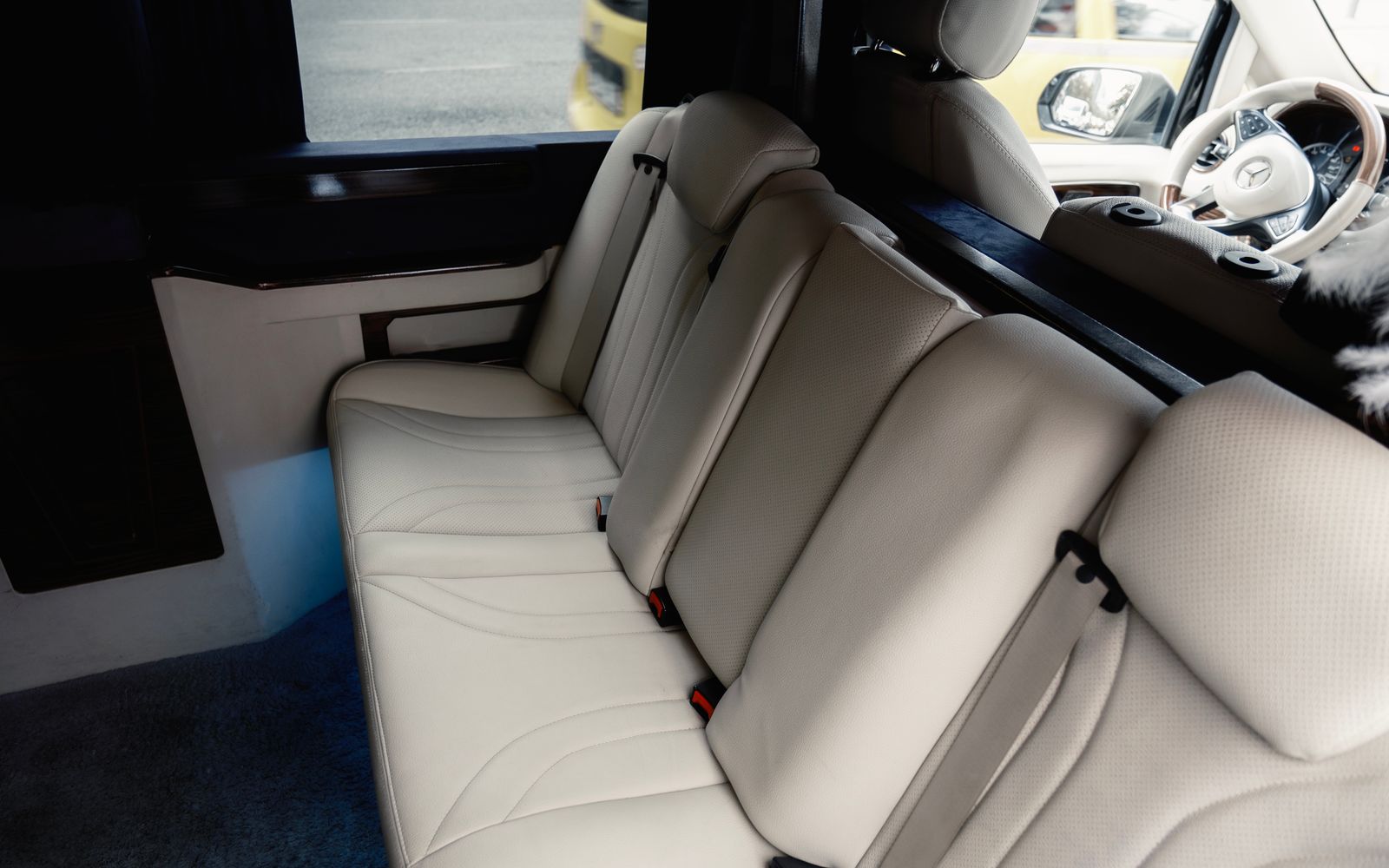
Two passengers with two large cases fit easily into a Mercedes-Benz E-Class. Carry the same luggage in an S-Class or a BMW i7 and you get extra room in the back. For a family with all its hold baggage, the V-Class manages without putting a single bag on a seat. If you'd like to sit higher and arrive with some presence, choose the Range Rover Autobiography. Vehicle make, model, colour and specification are subject to availability and confirmation.

Business movements through the western corridor — Platinum Chauffeurs

04Section

Business movements through the western corridor

A large share of Heathrow's traffic never touches London at all, because the airport sits right beside the Thames Valley. Slough, Reading, Windsor and Maidenhead are all a short drive away, and so are the business parks strung along the M4. Keep a chauffeur for the day and a visiting director can go from Terminal 5 to a meeting and be back at departures the same afternoon.

If an incoming team lands on several different flights, we time the cars to converge on one meeting point, and everyone sets off as a group. You can reach the chauffeur the whole time, and they'll wait at the terminal until the final person is through customs.

Private travel and where people go next — Platinum Chauffeurs

05Section

Private travel and where people go next

From Heathrow, our private transfers head off in all directions. In London, most go to Mayfair, Knightsbridge or Belgravia. To the west, Windsor takes twenty minutes when the road is clear, Oxford and the Cotswolds are comfortably under two hours away, and Bath is a straightforward single run down the M4.

We price a long trip from door to door as a single movement, instead of piecing it together from separate legs. So a family who land at Terminal 3 and carry on to the West Country keep one car and one chauffeur the whole way, stopping for a break wherever suits them.

Typical Transfers

01

Overnight arrival into Terminal 5

Off an overnight flight from Asia at six in the morning, the passenger finds their chauffeur in the arrivals hall, walks out to a saloon that's already waiting, and is in Belgravia before offices open. There's no queueing, no hunting around the forecourt, and nothing to discuss.

02

Board meeting in the Thames Valley

Three directors land at Terminals 2 and 3 on separate flights, all within ninety minutes of one another. Two vehicles hold, we gather the group, and they all reach an office in Reading together, ready to begin at midday.

03

Family departure with full hold luggage

Flying out of Terminal 4, a family of five with five hold cases and two pushchairs goes in an MPV. Loading happens at their front door; the chauffeur pulls up on the departures level and wheels the cases over to the trolley bay.

04

Onward leg to the Cotswolds

After landing at Terminal 3, guests head directly to a house just outside Burford. They keep the same car and chauffeur throughout, pause for a coffee close to Oxford, and never have to swap vehicles along the way.

Questions

Answered plainly.

If something here is not covered, send the question over. A direct answer is faster than a form.

Whichever terminal your flight is due into, based on the details we take at booking. Terminals 2 and 3 sit together in the Central Terminal Area. Terminal 4 and Terminal 5 are another matter: each is reached by its own approach, from opposite ends of the airport. Should the airline switch your terminal, let us know and we'll set a new meeting point.

Continue

Related pages worth reading next.

Detailed chauffeur knowledge

25 planning sections for Heathrow.

A complete reference covering booking, timing, vehicles, airport movements, business travel, events, long-distance work and the details that should be confirmed before a chauffeur journey.

01SEO Guidance

Choosing the right arrangement for Heathrow: airport chauffeur

Heathrow journey planning

The working brief for Heathrow records the fixed commitments, passenger priorities and amount of flexibility before discussing optional preferences. For an airport chauffeur arrangement, this order matters because which operating format fits the journey cannot be answered from a vehicle label alone. The itinerary, passenger and access detail provide the practical answer.

Good confirmation language for Heathrow distinguishes a requested preference from an agreed operating detail. In choosing the right arrangement, that means writing down the fixed commitments, passenger priorities and amount of flexibility. The result is specific without inventing certainty about availability, equipment or a journey duration that can still be affected by traffic and access.

  • Define the journey objective for Heathrow.
  • Name the passengers for Heathrow.
  • Identify the fixed time for Heathrow.
  • Record what remains flexible for Heathrow.

02SEO Guidance

Building the booking brief for Heathrow

A useful plan for Heathrow does not begin with a vehicle; it begins with complete addresses, local times, contacts and special instructions. The same applies to an airport chauffeur service request. Once what the chauffeur team needs before allocation is answered in the brief, timing and allocation decisions can be made without relying on assumptions.

A final review of building the booking brief asks whether the document clearly records complete addresses, local times, contacts and special instructions. If it does, Heathrow can absorb a genuine change without losing the original objective. Specific vehicles and equipment are confirmed separately, while road timings remain ranges rather than promises.

  • Use full addresses for Heathrow.
  • Add entrance details for Heathrow.
  • Confirm local times for Heathrow.
  • Name one live contact for Heathrow.

03SEO Guidance

Professional chauffeur standards for Heathrow

Heathrow should be planned around punctuality, presentation, route preparation and appropriate discretion. It is easier to organise as an airport transfer chauffeur arrangement when the passenger, timing and access requirements are recorded before a vehicle is confirmed. The page therefore treats how the service should feel in practice as an operational decision, with the useful answer coming from the itinerary rather than a generic label.

For Heathrow, the confirmation for professional chauffeur standards should show punctuality, presentation, route preparation and appropriate discretion. That written detail protects the fixed commitment while leaving room for genuine changes. It also keeps availability language honest: requested vehicles and equipment are not promised until confirmed, and journey times remain indicative because traffic, clearance, stops and road conditions can change the result.

  • Confirm the dress expectation for Heathrow.
  • Agree the meeting method for Heathrow.
  • Protect passenger privacy for Heathrow.
  • Keep communication concise for Heathrow.

04SEO Guidance

Private travel and discretion for Heathrow

Before Heathrow is confirmed, the planner has to decide how to keep the journey unobtrusive. A request for a luxury airport transfer arrangement is only useful when it records unmarked presentation, limited itinerary access and a quiet cabin, together with the passenger, timing and access requirements. That turns a broad search term into a journey the chauffeur team can actually prepare.

The written plan for private travel and discretion should make unmarked presentation, limited itinerary access and a quiet cabin easy to check. For Heathrow, this protects the important arrival or departure while keeping flexible parts genuinely flexible. Vehicle requests remain subject to confirmation, and any timing is presented as indicative where traffic, clearance, stops or road conditions can alter it.

  • Share data only as needed for Heathrow.
  • Confirm the authorised contact for Heathrow.
  • Avoid public passenger names for Heathrow.
  • Use one itinerary version for Heathrow.

05SEO Guidance

Executive and corporate requirements for Heathrow

The working brief for Heathrow records meeting priorities, productive cabin time and accountable changes before discussing optional preferences. For an executive airport transfer arrangement, this order matters because how the road plan supports a working day cannot be answered from a vehicle label alone. The itinerary, passenger and access detail provide the practical answer.

Good confirmation language for Heathrow distinguishes a requested preference from an agreed operating detail. In executive and corporate requirements, that means writing down meeting priorities, productive cabin time and accountable changes. The result is specific without inventing certainty about availability, equipment or a journey duration that can still be affected by traffic and access.

  • Order appointments by priority for Heathrow.
  • Allow for overruns for Heathrow.
  • Confirm invoicing references for Heathrow.
  • Protect confidential calls for Heathrow.

06SEO Guidance

Airport arrival planning for Heathrow

Heathrow journey planning

A useful plan for Heathrow does not begin with a vehicle; it begins with the flight reference, terminal, clearance allowance and passenger contact. The same applies to a private airport transfer request. Once how landing becomes a reliable meeting time is answered in the brief, timing and allocation decisions can be made without relying on assumptions.

A final review of airport arrival planning asks whether the document clearly records the flight reference, terminal, clearance allowance and passenger contact. If it does, Heathrow can absorb a genuine change without losing the original objective. Specific vehicles and equipment are confirmed separately, while road timings remain ranges rather than promises.

  • Confirm the terminal for Heathrow.
  • Supply the flight reference for Heathrow.
  • Count checked luggage for Heathrow.
  • Agree the arrivals meeting point for Heathrow.

07SEO Guidance

Airport departure planning for Heathrow

Heathrow should be planned around the airline requirement, terminal, road range and loading time. It is easier to organise as a meet and greet chauffeur arrangement when the passenger, timing and access requirements are recorded before a vehicle is confirmed. The page therefore treats how to set a responsible collection time as an operational decision, with the useful answer coming from the itinerary rather than a generic label.

For Heathrow, the confirmation for airport departure planning should show the airline requirement, terminal, road range and loading time. That written detail protects the fixed commitment while leaving room for genuine changes. It also keeps availability language honest: requested vehicles and equipment are not promised until confirmed, and journey times remain indicative because traffic, clearance, stops and road conditions can change the result.

  • Work backwards from check-in for Heathrow.
  • Allow loading time for Heathrow.
  • Check the terminal for Heathrow.
  • Protect a traffic margin for Heathrow.

08SEO Guidance

Meet and greet details for Heathrow

Before Heathrow is confirmed, the planner has to decide where passenger and chauffeur will recognise one another. A request for a chauffeur transfer arrangement is only useful when it records the meeting zone, name-board instruction and live mobile contact, together with the passenger, timing and access requirements. That turns a broad search term into a journey the chauffeur team can actually prepare.

The written plan for meet and greet details should make the meeting zone, name-board instruction and live mobile contact easy to check. For Heathrow, this protects the important arrival or departure while keeping flexible parts genuinely flexible. Vehicle requests remain subject to confirmation, and any timing is presented as indicative where traffic, clearance, stops or road conditions can alter it.

  • Choose inside or kerbside for Heathrow.
  • Confirm the displayed name for Heathrow.
  • Keep the phone available for Heathrow.
  • State a fallback meeting point for Heathrow.

09SEO Guidance

Hourly and day hire for Heathrow

The working brief for Heathrow records the service window, likely geography and end-of-day commitment before discussing optional preferences. For a chauffeur driven car arrangement, this order matters because when one continuous booking is more useful than separate transfers cannot be answered from a vehicle label alone. The itinerary, passenger and access detail provide the practical answer.

Good confirmation language for Heathrow distinguishes a requested preference from an agreed operating detail. In hourly and day hire, that means writing down the service window, likely geography and end-of-day commitment. The result is specific without inventing certainty about availability, equipment or a journey duration that can still be affected by traffic and access.

  • Set the operating window for Heathrow.
  • List known stops for Heathrow.
  • Identify the final commitment for Heathrow.
  • Explain likely changes for Heathrow.

10SEO Guidance

Point-to-point transfers for Heathrow

A useful plan for Heathrow does not begin with a vehicle; it begins with the correct entrance, readiness time and destination deadline. The same applies to a private driver hire request. Once what makes a simple transfer precise is answered in the brief, timing and allocation decisions can be made without relying on assumptions.

A final review of point-to-point transfers asks whether the document clearly records the correct entrance, readiness time and destination deadline. If it does, Heathrow can absorb a genuine change without losing the original objective. Specific vehicles and equipment are confirmed separately, while road timings remain ranges rather than promises.

  • Confirm both doors for Heathrow.
  • State passenger readiness for Heathrow.
  • Allow for loading for Heathrow.
  • Share the arrival target for Heathrow.

11SEO Guidance

Long-distance and intercity travel for Heathrow

Heathrow journey planning

Heathrow should be planned around a realistic route range, rest, luggage and the onward or return plan. It is easier to organise as a chauffeur service arrangement when the passenger, timing and access requirements are recorded before a vehicle is confirmed. The page therefore treats how a full road journey should be structured as an operational decision, with the useful answer coming from the itinerary rather than a generic label.

For Heathrow, the confirmation for long-distance and intercity travel should show a realistic route range, rest, luggage and the onward or return plan. That written detail protects the fixed commitment while leaving room for genuine changes. It also keeps availability language honest: requested vehicles and equipment are not promised until confirmed, and journey times remain indicative because traffic, clearance, stops and road conditions can change the result.

  • Plan sensible breaks for Heathrow.
  • Confirm the full destination for Heathrow.
  • Describe the return for Heathrow.
  • Treat map time as indicative for Heathrow.

12SEO Guidance

Roadshows and multi-stop days for Heathrow

Before Heathrow is confirmed, the planner has to decide how several movements remain one controlled itinerary. A request for a chauffeur services arrangement is only useful when it records a versioned running order, holding positions and change authority, together with the passenger, timing and access requirements. That turns a broad search term into a journey the chauffeur team can actually prepare.

The written plan for roadshows and multi-stop days should make a versioned running order, holding positions and change authority easy to check. For Heathrow, this protects the important arrival or departure while keeping flexible parts genuinely flexible. Vehicle requests remain subject to confirmation, and any timing is presented as indicative where traffic, clearance, stops or road conditions can alter it.

  • Use one running order for Heathrow.
  • Name the decision-maker for Heathrow.
  • Confirm every entrance for Heathrow.
  • Protect time between stops for Heathrow.

13SEO Guidance

Conference and event transport for Heathrow

The working brief for Heathrow records manifests, vehicle numbering and an agreed dispatch contact before discussing optional preferences. For a chauffeur hire arrangement, this order matters because how passenger groups reach the right entrance together cannot be answered from a vehicle label alone. The itinerary, passenger and access detail provide the practical answer.

Good confirmation language for Heathrow distinguishes a requested preference from an agreed operating detail. In conference and event transport, that means writing down manifests, vehicle numbering and an agreed dispatch contact. The result is specific without inventing certainty about availability, equipment or a journey duration that can still be affected by traffic and access.

  • Name each passenger group for Heathrow.
  • Number the vehicles for Heathrow.
  • Confirm access instructions for Heathrow.
  • Plan the departure wave for Heathrow.

14SEO Guidance

Wedding and private occasion travel for Heathrow

A useful plan for Heathrow does not begin with a vehicle; it begins with passenger order, presentation, photography time and venue access. The same applies to a chauffeur UK request. Once how ceremonial movements are protected is answered in the brief, timing and allocation decisions can be made without relying on assumptions.

A final review of wedding and private occasion travel asks whether the document clearly records passenger order, presentation, photography time and venue access. If it does, Heathrow can absorb a genuine change without losing the original objective. Specific vehicles and equipment are confirmed separately, while road timings remain ranges rather than promises.

  • List every movement for Heathrow.
  • Name the passengers for Heathrow.
  • Protect photography time for Heathrow.
  • Confirm venue access for Heathrow.

15SEO Guidance

Private aviation ground transport for Heathrow

Heathrow should be planned around the handling facility, aircraft reference and passenger handover. It is easier to organise as a chauffeur London arrangement when the passenger, timing and access requirements are recorded before a vehicle is confirmed. The page therefore treats how the vehicle coordinates with a private flight as an operational decision, with the useful answer coming from the itinerary rather than a generic label.

For Heathrow, the confirmation for private aviation ground transport should show the handling facility, aircraft reference and passenger handover. That written detail protects the fixed commitment while leaving room for genuine changes. It also keeps availability language honest: requested vehicles and equipment are not promised until confirmed, and journey times remain indicative because traffic, clearance, stops and road conditions can change the result.

  • Name the FBO or handler for Heathrow.
  • Share the flight reference for Heathrow.
  • Confirm the lead passenger for Heathrow.
  • Check the onward destination for Heathrow.

16SEO Guidance

Passengers, luggage and equipment for Heathrow

Heathrow journey planning

Before Heathrow is confirmed, the planner has to decide what the vehicle must carry comfortably. A request for an airport chauffeur arrangement is only useful when it records seat use, case dimensions, specialist items and boarding needs, together with the passenger, timing and access requirements. That turns a broad search term into a journey the chauffeur team can actually prepare.

The written plan for passengers, luggage and equipment should make seat use, case dimensions, specialist items and boarding needs easy to check. For Heathrow, this protects the important arrival or departure while keeping flexible parts genuinely flexible. Vehicle requests remain subject to confirmation, and any timing is presented as indicative where traffic, clearance, stops or road conditions can alter it.

  • Count adults and children for Heathrow.
  • List cases by size for Heathrow.
  • Mention unusual equipment for Heathrow.
  • Confirm access requests for Heathrow.

17SEO Guidance

Mercedes saloon choices for Heathrow

The working brief for Heathrow records passenger count, rear-cabin preference and airport luggage before discussing optional preferences. For an airport chauffeur service arrangement, this order matters because when a saloon is the practical answer cannot be answered from a vehicle label alone. The itinerary, passenger and access detail provide the practical answer.

Good confirmation language for Heathrow distinguishes a requested preference from an agreed operating detail. In mercedes saloon choices, that means writing down passenger count, rear-cabin preference and airport luggage. The result is specific without inventing certainty about availability, equipment or a journey duration that can still be affected by traffic and access.

  • Compare E Class capacity for Heathrow.
  • Compare S Class comfort for Heathrow.
  • Count large cases for Heathrow.
  • Confirm the requested category for Heathrow.

18SEO Guidance

Mercedes V Class and group travel for Heathrow

A useful plan for Heathrow does not begin with a vehicle; it begins with group seating, luggage volume and ease of boarding. The same applies to an airport transfer chauffeur request. Once when an MPV offers the better layout is answered in the brief, timing and allocation decisions can be made without relying on assumptions.

A final review of mercedes v class and group travel asks whether the document clearly records group seating, luggage volume and ease of boarding. If it does, Heathrow can absorb a genuine change without losing the original objective. Specific vehicles and equipment are confirmed separately, while road timings remain ranges rather than promises.

  • Confirm the seat layout for Heathrow.
  • Count hold luggage for Heathrow.
  • Allow boarding time for Heathrow.
  • Keep model requests conditional for Heathrow.

19SEO Guidance

Prestige and signature vehicles for Heathrow

Heathrow should be planned around occasion, access, luggage and confirmed availability. It is easier to organise as a luxury airport transfer arrangement when the passenger, timing and access requirements are recorded before a vehicle is confirmed. The page therefore treats when the arrival itself is part of the brief as an operational decision, with the useful answer coming from the itinerary rather than a generic label.

For Heathrow, the confirmation for prestige and signature vehicles should show occasion, access, luggage and confirmed availability. That written detail protects the fixed commitment while leaving room for genuine changes. It also keeps availability language honest: requested vehicles and equipment are not promised until confirmed, and journey times remain indicative because traffic, clearance, stops and road conditions can change the result.

  • Match the car to the occasion for Heathrow.
  • Check kerbside access for Heathrow.
  • Confirm colour requests for Heathrow.
  • Keep specification subject to confirmation for Heathrow.

20SEO Guidance

SUV chauffeur travel for Heathrow

Before Heathrow is confirmed, the planner has to decide when access, luggage or road conditions favour an SUV. A request for an executive airport transfer arrangement is only useful when it records step-in height, load shape, route and passenger preference, together with the passenger, timing and access requirements. That turns a broad search term into a journey the chauffeur team can actually prepare.

The written plan for suv chauffeur travel should make step-in height, load shape, route and passenger preference easy to check. For Heathrow, this protects the important arrival or departure while keeping flexible parts genuinely flexible. Vehicle requests remain subject to confirmation, and any timing is presented as indicative where traffic, clearance, stops or road conditions can alter it.

  • Check boarding comfort for Heathrow.
  • Measure unusual luggage for Heathrow.
  • Confirm the route for Heathrow.
  • Request the category early for Heathrow.

21SEO Guidance

Family and accessibility planning for Heathrow

Heathrow journey planning

The working brief for Heathrow records ages, requested equipment, boarding support and journey breaks before discussing optional preferences. For a private airport transfer arrangement, this order matters because how individual passenger needs shape the booking cannot be answered from a vehicle label alone. The itinerary, passenger and access detail provide the practical answer.

Good confirmation language for Heathrow distinguishes a requested preference from an agreed operating detail. In family and accessibility planning, that means writing down ages, requested equipment, boarding support and journey breaks. The result is specific without inventing certainty about availability, equipment or a journey duration that can still be affected by traffic and access.

  • Give child ages for Heathrow.
  • Describe mobility equipment for Heathrow.
  • Confirm assistance preferences for Heathrow.
  • Allow extra boarding time for Heathrow.

22SEO Guidance

Timing, traffic and access for Heathrow

A useful plan for Heathrow does not begin with a vehicle; it begins with road ranges, security, walking, loading and temporary access controls. The same applies to a meet and greet chauffeur request. Once where the itinerary needs genuine margin is answered in the brief, timing and allocation decisions can be made without relying on assumptions.

A final review of timing, traffic and access asks whether the document clearly records road ranges, security, walking, loading and temporary access controls. If it does, Heathrow can absorb a genuine change without losing the original objective. Specific vehicles and equipment are confirmed separately, while road timings remain ranges rather than promises.

  • Separate road and loading time for Heathrow.
  • Confirm the correct entrance for Heathrow.
  • Check event-day access for Heathrow.
  • Avoid best-case promises for Heathrow.

23SEO Guidance

Changes and live communication for Heathrow

Heathrow should be planned around one authorised contact, one current itinerary and clear replacement instructions. It is easier to organise as a chauffeur transfer arrangement when the passenger, timing and access requirements are recorded before a vehicle is confirmed. The page therefore treats how a revised plan reaches everyone who needs it as an operational decision, with the useful answer coming from the itinerary rather than a generic label.

For Heathrow, the confirmation for changes and live communication should show one authorised contact, one current itinerary and clear replacement instructions. That written detail protects the fixed commitment while leaving room for genuine changes. It also keeps availability language honest: requested vehicles and equipment are not promised until confirmed, and journey times remain indicative because traffic, clearance, stops and road conditions can change the result.

  • Name the changed movement for Heathrow.
  • State what it replaces for Heathrow.
  • Update the passenger for Heathrow.
  • Keep one current version for Heathrow.

24SEO Guidance

Quotation and confirmation for Heathrow

Before Heathrow is confirmed, the planner has to decide how the requested scope becomes a written reservation. A request for a chauffeur driven car arrangement is only useful when it records the complete itinerary, waiting, vehicle category and confirmed requirements, together with the passenger, timing and access requirements. That turns a broad search term into a journey the chauffeur team can actually prepare.

The written plan for quotation and confirmation should make the complete itinerary, waiting, vehicle category and confirmed requirements easy to check. For Heathrow, this protects the important arrival or departure while keeping flexible parts genuinely flexible. Vehicle requests remain subject to confirmation, and any timing is presented as indicative where traffic, clearance, stops or road conditions can alter it.

  • Review the scope for Heathrow.
  • Check every date for Heathrow.
  • Confirm availability for Heathrow.
  • Keep the quotation in writing for Heathrow.

25SEO Guidance

Final journey checklist for Heathrow

The working brief for Heathrow records passenger details, contact numbers, addresses, timings, capacity and change instructions before discussing optional preferences. For a private driver hire arrangement, this order matters because what deserves one last review before travel cannot be answered from a vehicle label alone. The itinerary, passenger and access detail provide the practical answer.

Good confirmation language for Heathrow distinguishes a requested preference from an agreed operating detail. In final journey checklist, that means writing down passenger details, contact numbers, addresses, timings, capacity and change instructions. The result is specific without inventing certainty about availability, equipment or a journey duration that can still be affected by traffic and access.

  • Check names and numbers for Heathrow.
  • Check dates and time zones for Heathrow.
  • Check the vehicle category for Heathrow.
  • Check the live contact for Heathrow.

LHR. Met precisely.

Give the flight number when you reserve. Arrival times are monitored so the chauffeur adjusts to the aircraft rather than the schedule.

Every journey is quoted to its own requirements. Reservations are confirmed directly with you before travel.

WhatsApp
Get a QuoteWhatsApp