Chauffeur Guides
7 min readS-Class or V-Class: which vehicle, and why
The S-Class and the V-Class solve different problems. One is a saloon built around two rear passengers; the other is a cabin built around a group. Passenger count is only the first question.
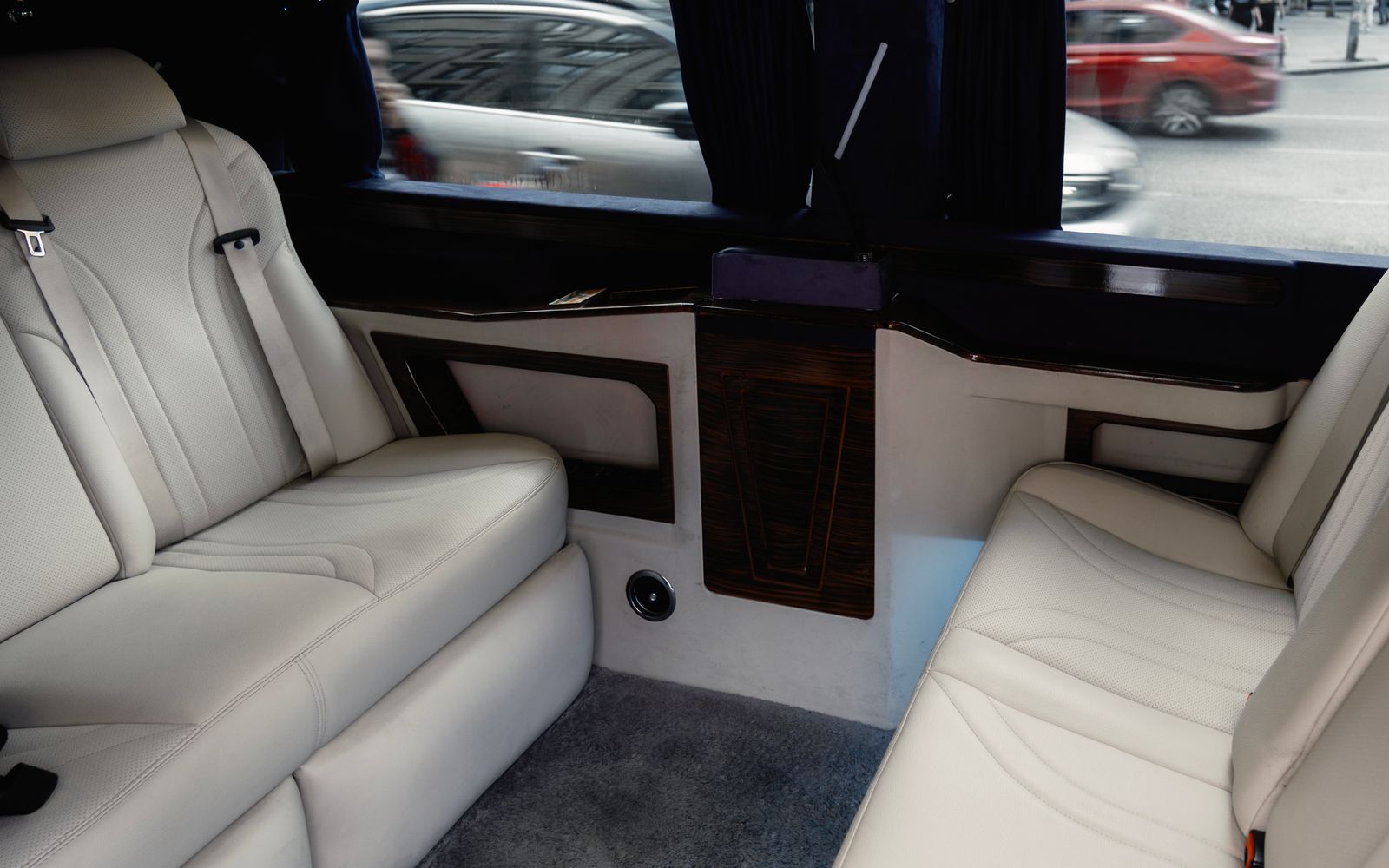
- S-Class
- Long-wheelbase saloon built around two rear passengers
- V-Class
- MPV cabin for groups, entered through a sliding door
- Decider
- Luggage geometry more often than passenger count
- Availability
- Make, model, colour and specification subject to confirmation
In Short
These two Mercedes-Benz vehicles account for a large share of chauffeur bookings across the United Kingdom, and clients regularly ask which to take. The honest answer is that they are not really competitors. An S-Class is the right vehicle for one or two people who want a saloon. A V-Class is the right vehicle for four or more, or for two people with a great deal of luggage.
Where it becomes interesting is the middle ground: three passengers, or two passengers with heavy bags, or a group who need to talk to one another on the way. That is where the choice is genuinely open, and where the secondary characteristics start to decide it.
Make, model, colour and specification are always subject to availability and confirmation. What follows compares the two formats rather than any individual car, since it is the format that determines whether a particular journey works. A saloon is a saloon whichever badge it carries, and the same holds true of a large MPV. The differences that matter here are physical rather than decorative.
01Section
Two different instruments
The S-Class is a long-wheelbase executive saloon. Its design priority is the rear seat: legroom, isolation from road noise, and a low, enveloping seating position. It is the default chauffeur vehicle across most of the world for good reason, and for one or two passengers it is difficult to improve upon.
The V-Class is a large MPV with a passenger cabin rather than a rear bench. Depending on specification the seats may face one another around a table or run in conventional rows. Its priorities are volume, headroom and flexibility. It carries people and their belongings without either one being compromised by the other.
Neither is a lesser version of the other. Choosing badly is not a question of comfort but of function: a party of five does not fit into a saloon at all, and a single passenger in an MPV has bought space they will not use at the cost of the saloon's ride.
02Section
Passenger count
An S-Class carries three passengers in the rear on paper. In chauffeur practice it carries two comfortably. The centre rear position is compromised by the transmission tunnel and the rear console, and on a long journey nobody volunteers for it. Treat the saloon as a two-passenger vehicle and it will never disappoint.
A V-Class carries six or seven depending on the seating layout, with every position a real seat. Four passengers travel in considerable comfort. Seven is workable for a short transfer but tight once luggage enters the calculation, which is why an honest capacity conversation matters more than the headline number.
Three passengers is the genuine decision point. Three in a saloon is legal and physically possible; three in an MPV is comfortable with room to spare. If the journey runs under half an hour and the party knows one another well, the saloon is fine. Beyond that, the MPV is the better call.
- One or two passengers: the saloon, without hesitation
- Three passengers: workable in a saloon on short runs, better in an MPV
- Four or more passengers: the MPV every time
03Section
Luggage geometry
Luggage is where most vehicle decisions are actually made, and raw volume is a misleading measure. A saloon boot is a shallow, wide space with a fixed aperture. Two large cases and a cabin bag load easily. A third large case usually does not, whatever the litre figure on the brochure appears to suggest.
The V-Class has a tall compartment behind the last row of seats and a load height that accepts awkward shapes. Golf bags, ski equipment, cello cases, camera kit, a pushchair and a folded wheelchair all go in without negotiation. That geometry, rather than capacity alone, is the real argument for the MPV on a family or crew booking.
The rule when booking is to count large cases and cabin cases separately and to name anything that is not a suitcase. Two passengers returning from a month abroad often need the MPV that their passenger count would never have suggested. Nothing about that is unusual, and it is far better identified at the quotation stage than at a terminal kerb.
- S-Class: about two large cases plus cabin bags
- V-Class: several large cases plus awkwardly shaped items
- Name sports equipment, instruments and pushchairs explicitly

04Section
Boarding height and access
The saloon seats sit low. Boarding involves lowering into the seat and rising back out of it, which is unremarkable for most passengers and awkward for anyone with restricted hip or knee movement. Formal dress can make the manoeuvre less graceful than the occasion deserves. It is worth a moment's thought before a wedding or an evening event.
The V-Class boards through a sliding side door onto a step, at a height close to standing. Passengers walk in rather than fold in. For older travellers, for anyone recovering from an injury, and for long dresses at a formal event, that single difference decides the whole question. Nothing else on the specification sheet competes with it.
The sliding door also has a practical advantage on a tight kerb. It does not swing into traffic or into the car parked alongside, which makes it easier to use on a narrow London street or a crowded hotel forecourt at a busy hour. On a school run or a set-down outside a restaurant, that is a real difference rather than a marginal one.
05Section
Privacy and conversation
For a single passenger working, the saloon is the quieter environment. The rear compartment is well isolated, the seating position is fixed and forward, and a confidential call is straightforward to take. Rear privacy glass keeps the cabin out of view at a set-down. There is also less to look at, which for concentrated reading counts as an advantage.
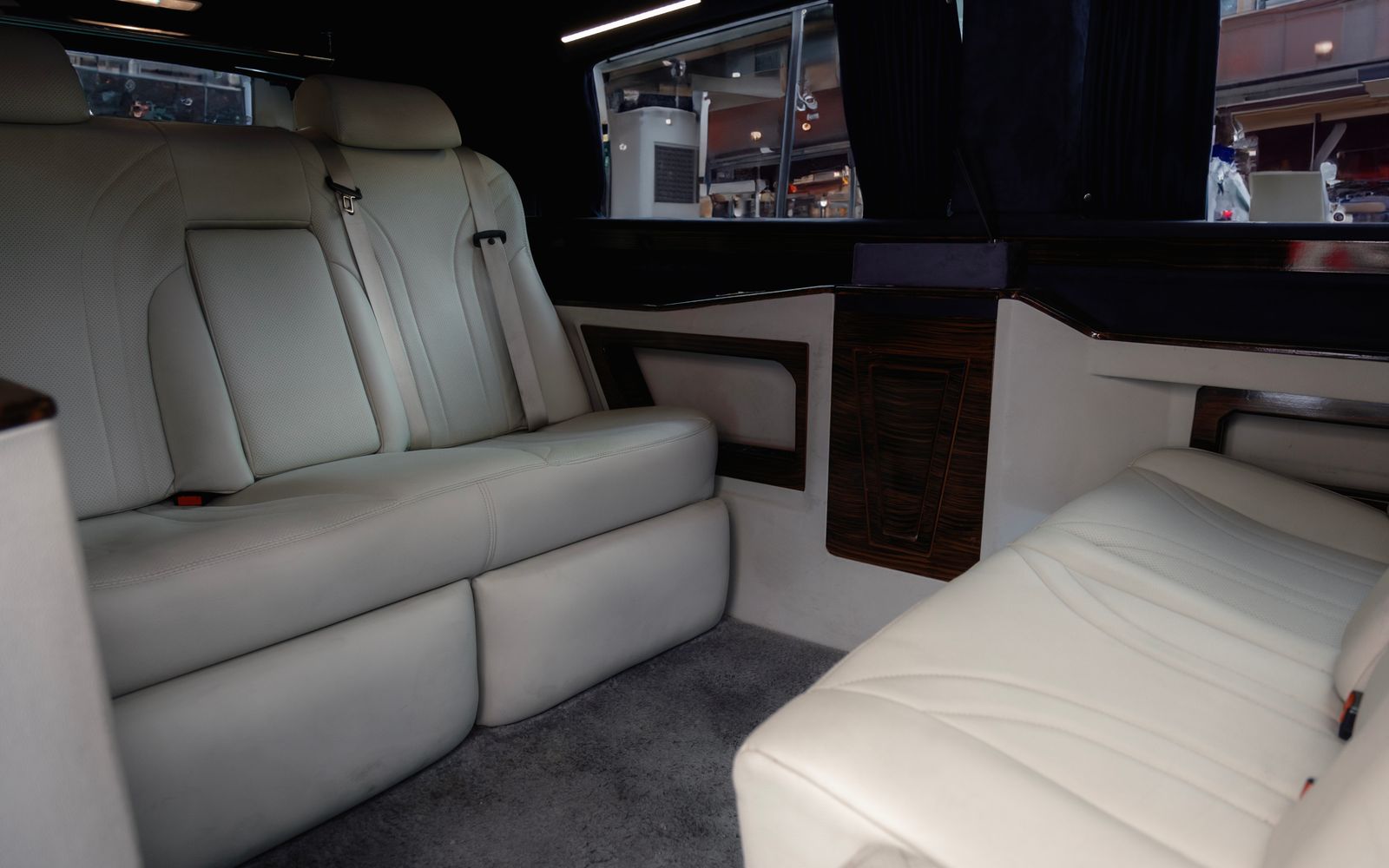
For a group who need to speak to one another, the MPV wins clearly. A facing seat arrangement around a table turns the journey into a working session, which is why it is often the right vehicle for a team travelling to a pitch or a board meeting rather than for an individual travelling alone.
Consider what the journey is actually for. A chief executive reading briefing papers wants the saloon. The same person travelling with three colleagues who need to agree a position before they arrive wants the MPV, and the additional space is entirely incidental to that. The vehicle should follow the purpose of the journey rather than the seniority of the passenger.

06Section
Ride character
The saloon rides better. It sits lower, carries its weight lower, and its suspension is tuned around a rear passenger reading. Over long distances at motorway speed the difference is noticeable, particularly on poorer surfaces where a taller vehicle moves more in the cabin. Anyone who regularly works on paper for three hours at a stretch will feel it.
The MPV is a comfortable vehicle by any normal measure, and on smooth motorway sections the gap narrows considerably. Where it shows is in town, over expansion joints and speed tables, where the higher body produces more movement than a saloon would in the same place. Most passengers notice the extra room long before they notice the extra movement.
For anyone prone to travel sickness, a forward-facing position is the safer choice in either vehicle. Sitting rearward around a table is comfortable for most passengers and not for all, and it is worth asking the question rather than assuming an answer. Seating can usually be arranged around the reply if it arrives before the vehicle is allocated.
07Section
Airport suitability and the final call
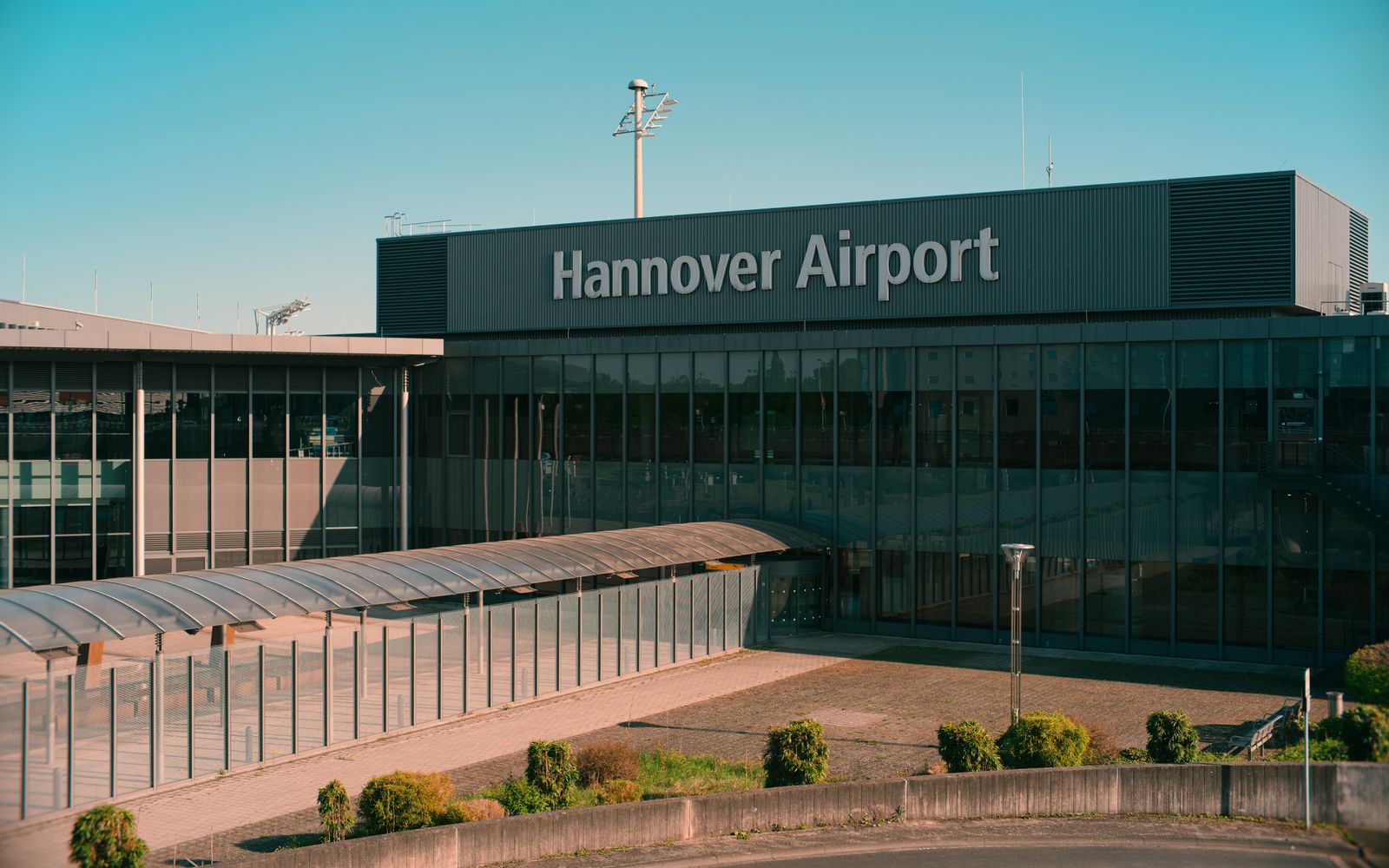
For airport work the calculation almost always resolves to luggage. Two passengers with hand baggage and a case each are ideally served by the saloon. The same two passengers returning from a long trip with four cases are not, and that booking should have been an MPV from the start.
For groups arriving together, the MPV keeps a party in one vehicle, which is materially simpler at a terminal than coordinating two saloons across a forecourt. For a single executive arriving overnight and going straight to a meeting, the saloon is worth its tighter luggage limit. Between those two cases the answer follows from the luggage every time.
The summary is short. Book the saloon for one or two people and the space to work. Book the MPV for groups, for heavy or awkward luggage, for easier boarding, and for journeys where passengers need to face one another. Where the two are close, state the real numbers and take the recommendation.
- S-Class: one or two passengers, moderate luggage, solo working
- V-Class: three or more passengers, heavy luggage, easier boarding
- Give real passenger and case numbers, then take the advice offered
Reader Questions
Answered plainly.
If something here is not covered, send the question over. A direct answer is faster than a form.
Two in genuine comfort. Three is possible, but the centre rear position is compromised by the console and the transmission tunnel, so it is only reasonable on a short transfer. For three or more passengers on any journey of length, an MPV is the better vehicle.
It rides differently rather than badly. The saloon sits lower and moves less over poor surfaces, which is noticeable at motorway speed. The MPV offers far more space, headroom and flexibility, and on smooth roads the difference between the two narrows considerably.
The MPV, in almost every case. It boards through a sliding side door onto a step at close to standing height, so passengers walk in rather than lower themselves into a low seat. It also accommodates a folded wheelchair or a walking frame without difficulty.
Four adults will not travel comfortably in a saloon and their luggage will not fit behind them. The boot takes roughly two large cases plus cabin bags. For four passengers with hold luggage, the correct answer is an MPV or a second vehicle.
That depends on the specification of the individual vehicle. Some are configured with a facing arrangement around a table, which suits a team working together, and others run in conventional forward-facing rows. State your preference when booking so the requirement can be noted against the job.
Decide on luggage rather than on passenger count. Two travellers with a case each are well served by a saloon; the same pair returning from a long trip with four cases are not. Groups arriving together are simpler to manage in one MPV than across two separate saloons.